
Bosum Village - Mobile App
[CONCEPT]
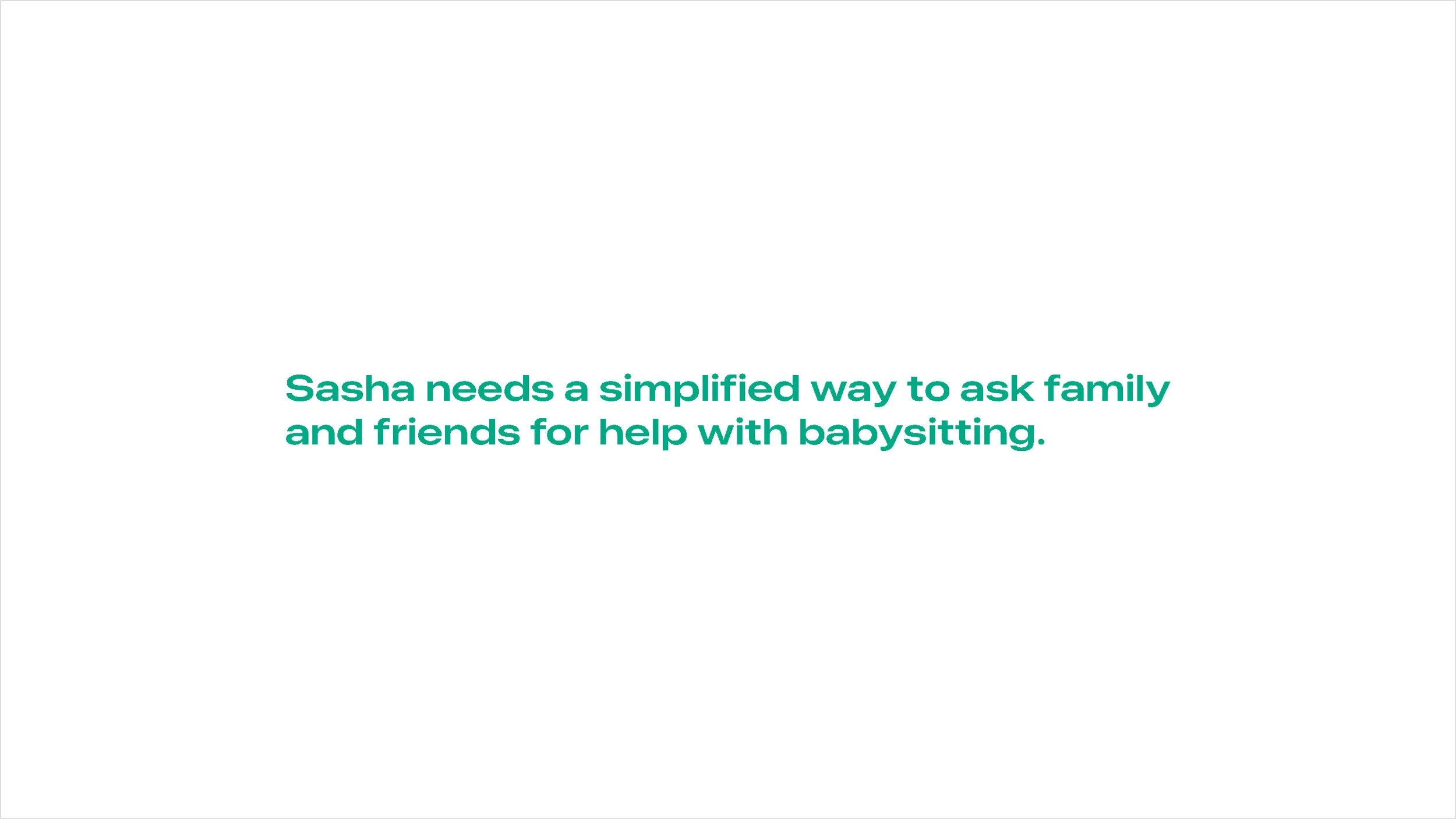
Bosum is a self-care support app designed to help women, particularly mothers, reclaim time for themselves without guilt or friction. The core idea is simple. When a user needs personal time, the app allows them to send a structured request to trusted loved ones asking for support, whether that means childcare coverage, help with responsibilities, or protected time for rest.
[PROCESS]
I began with qualitative research to understand how women experience self-care and where breakdowns occur. I conducted one-on-one interviews and surveys with women navigating motherhood, work, and caregiving responsibilities. The goal was to identify emotional barriers, behavioral patterns, and unmet needs around asking for help.
Key activities included:
• User interviews to explore attitudes toward self-care and support
• Surveys to validate patterns at a broader scale
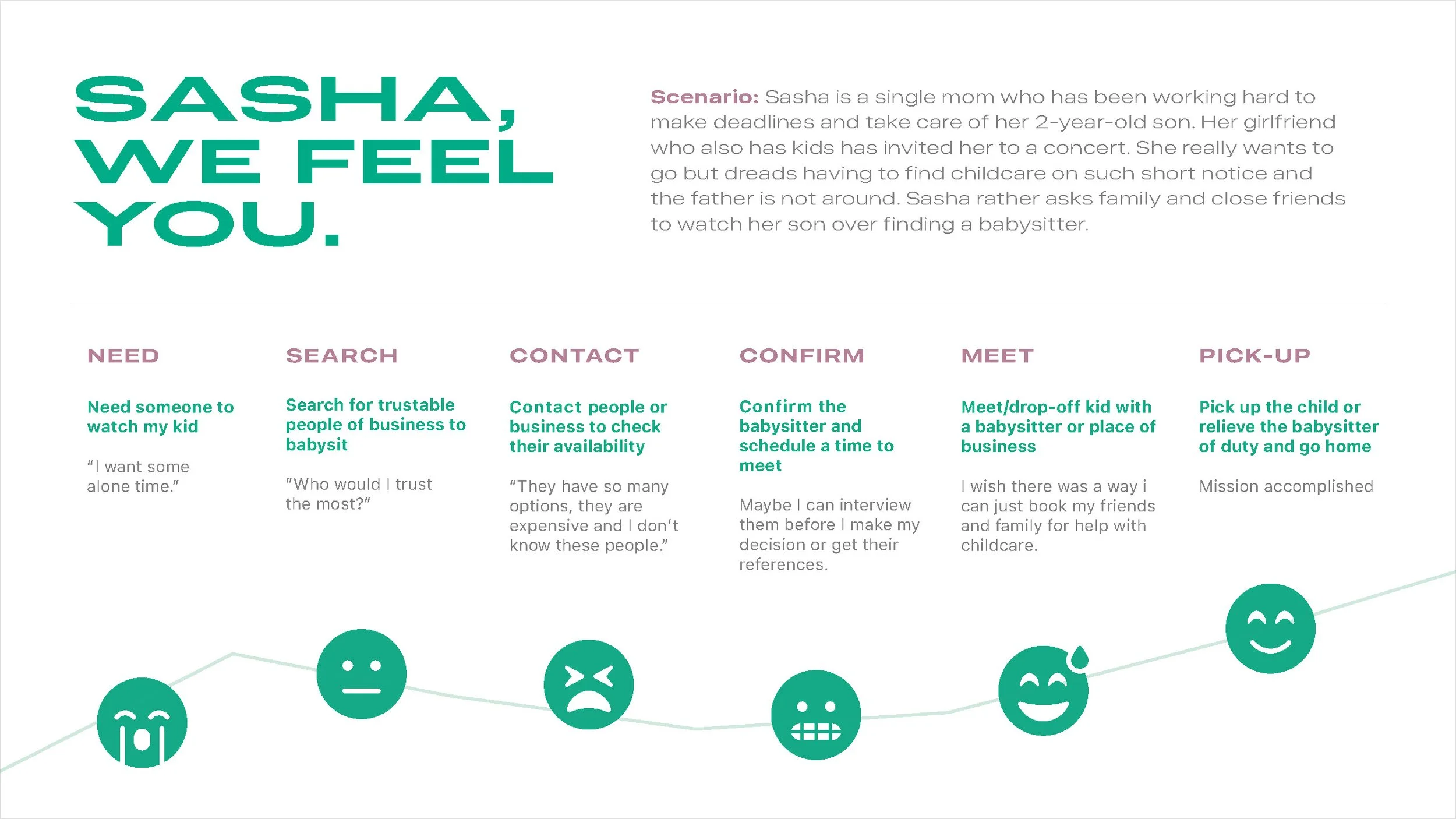
• Journey mapping to visualize emotional highs and lows across a typical day
• Identification of moments where support was needed but not requested
Synthesis & Insights
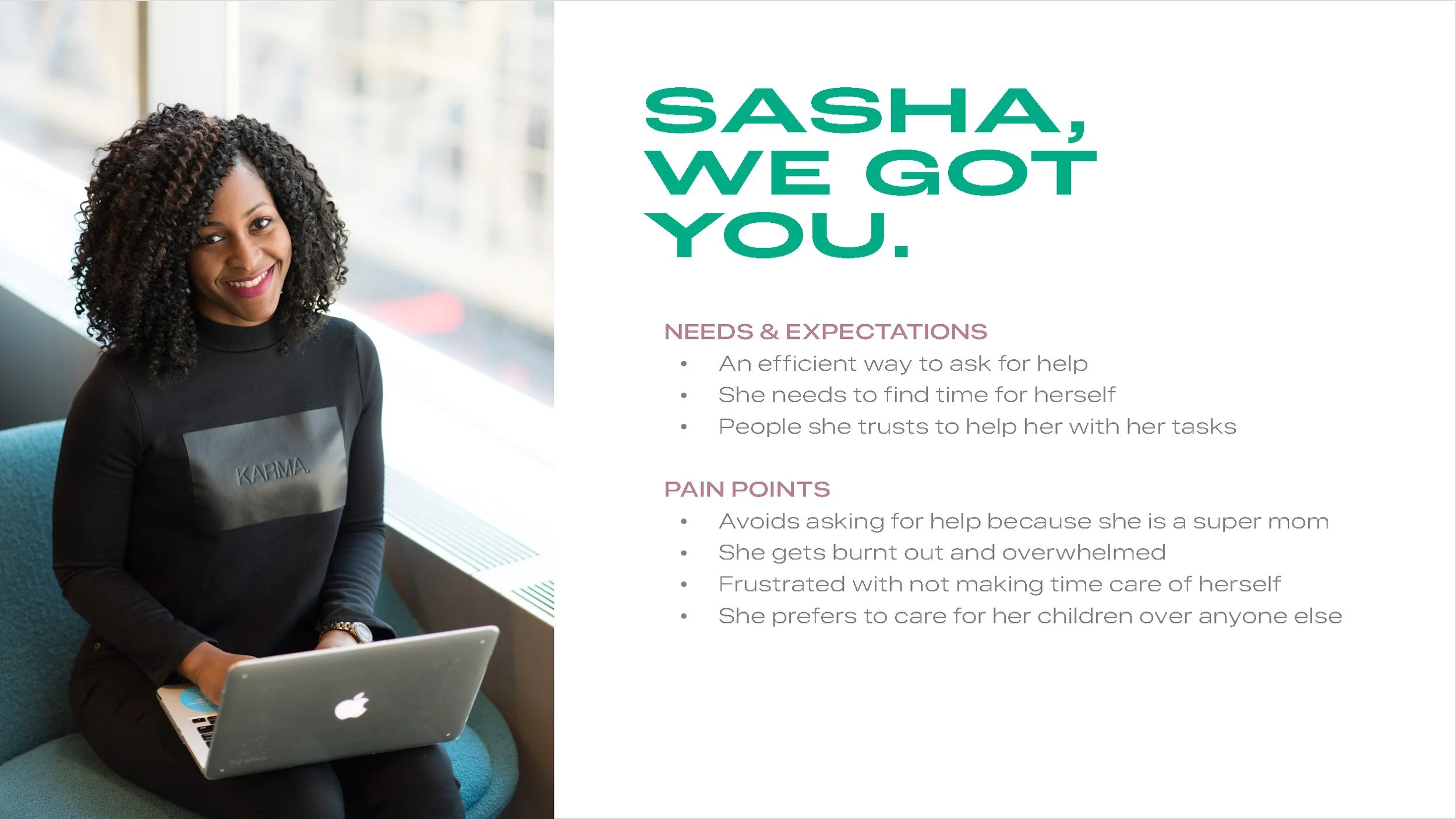
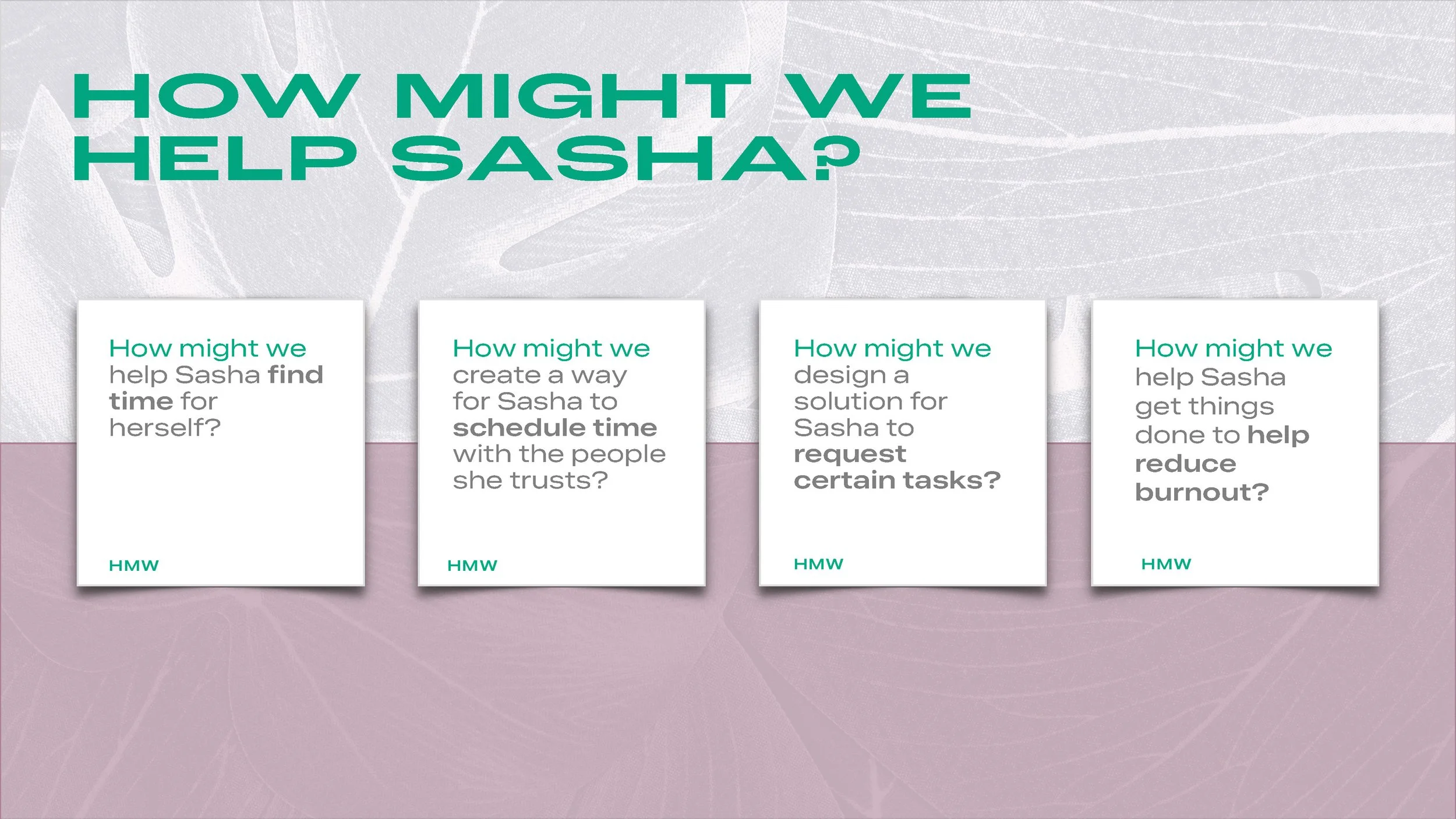
Research revealed that the primary barrier was not lack of willingness from loved ones, but discomfort in initiating the ask. Users expressed guilt, fear of burdening others, and uncertainty around how to communicate their needs clearly.
Design & Validation
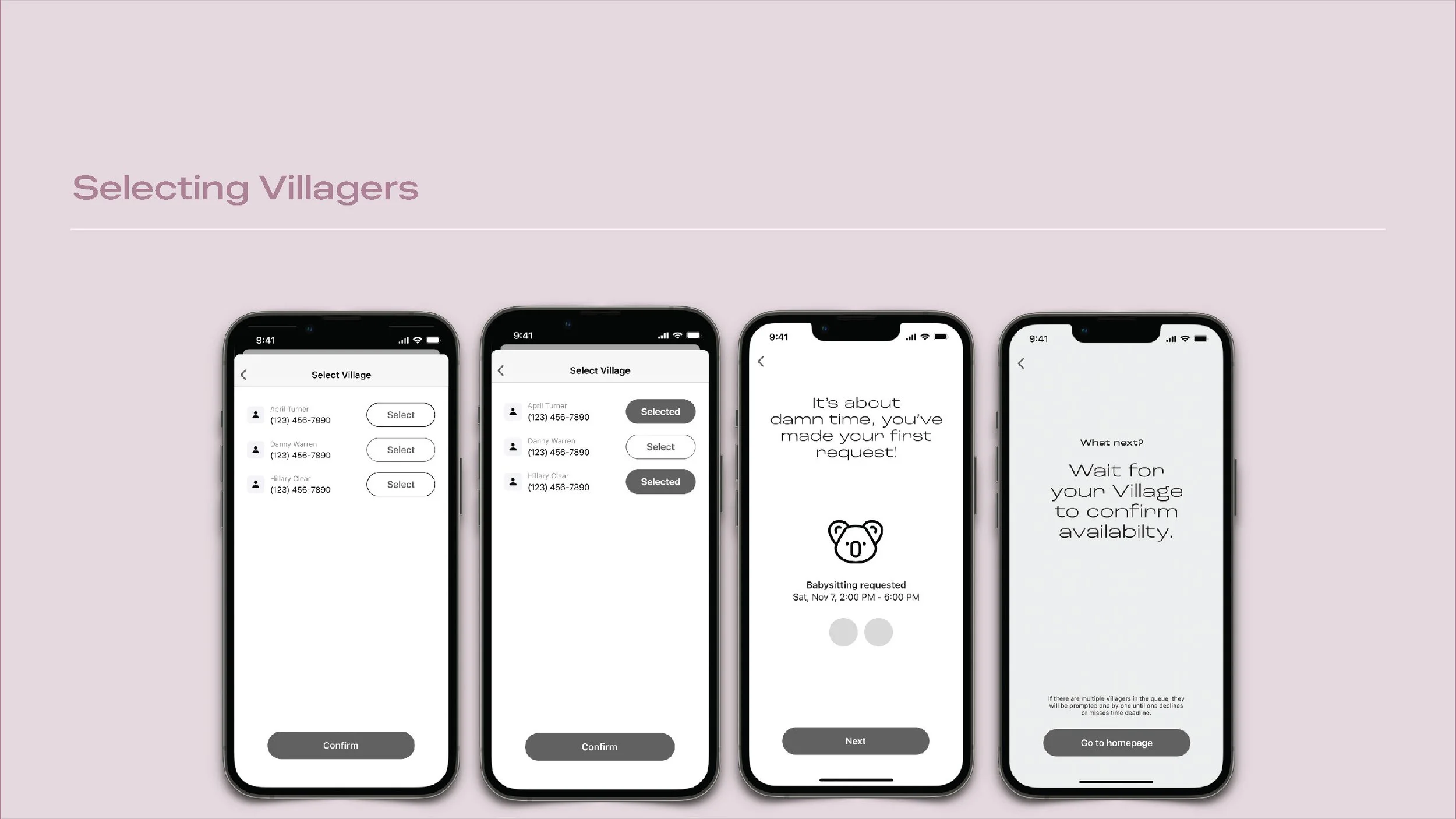
Based on these insights, I defined the core experience around one central action: making a clear, low-friction request for support. I translated findings into user flows and wireframes, focusing on clarity, emotional ease, and trust.
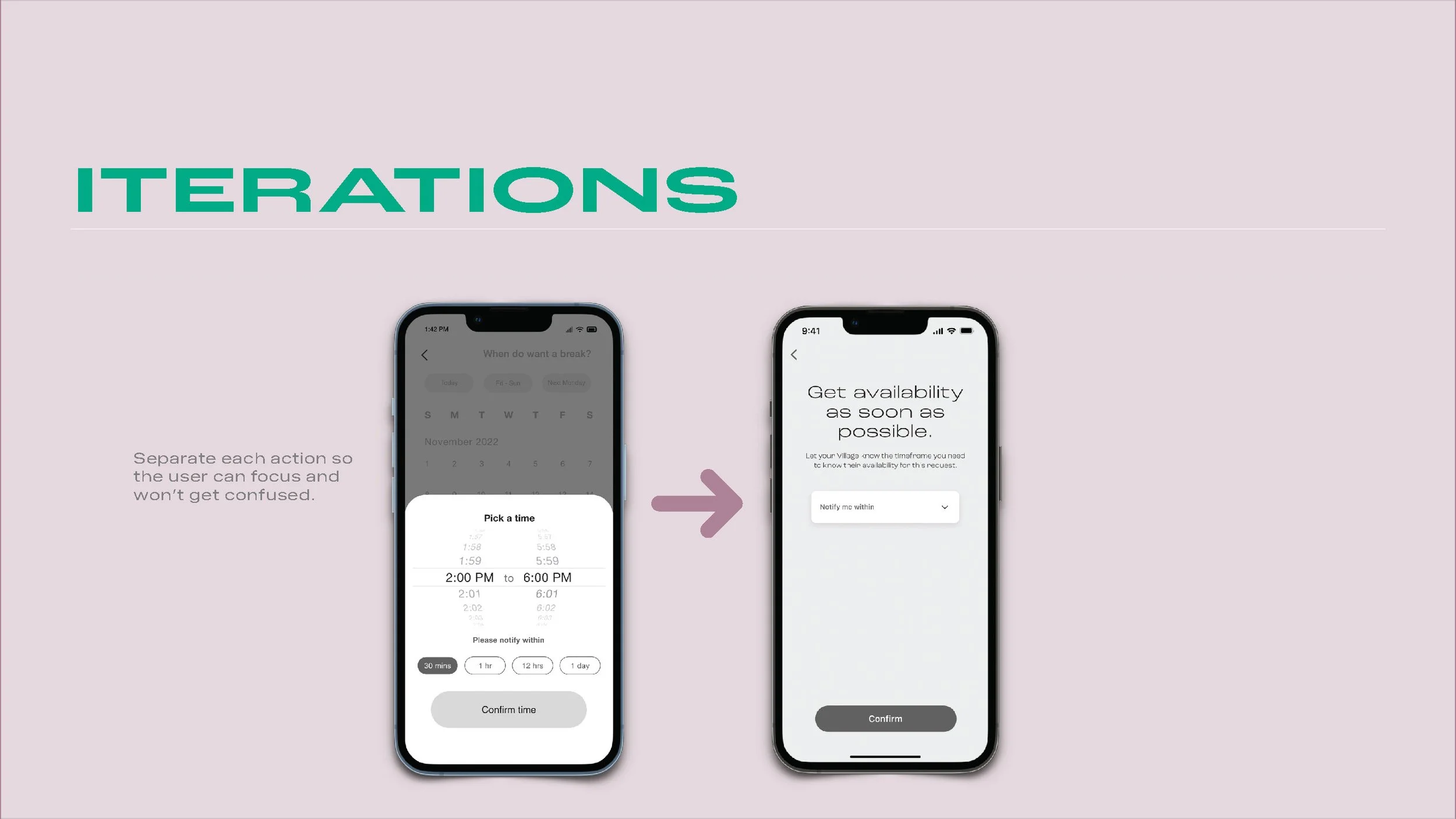
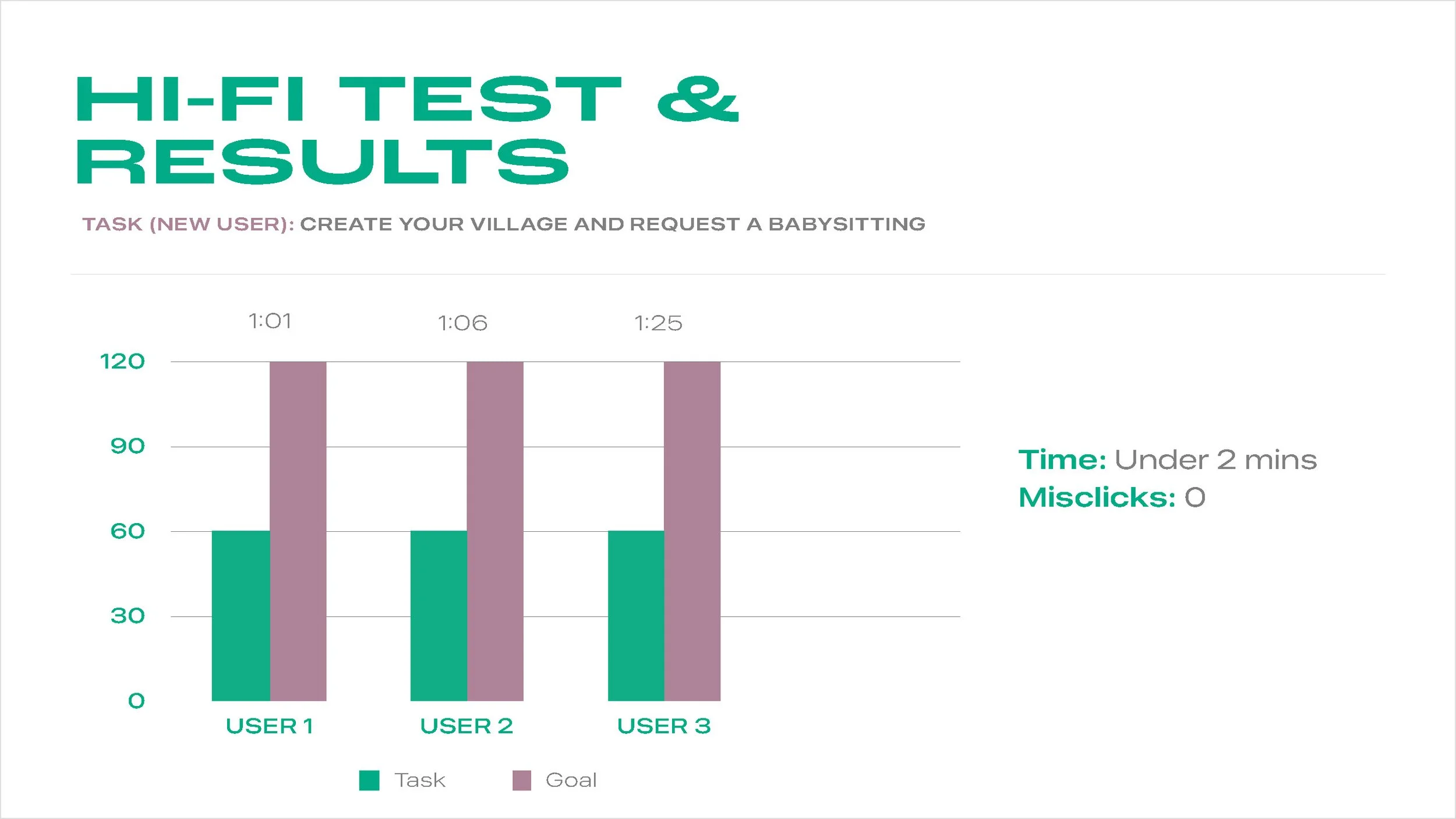
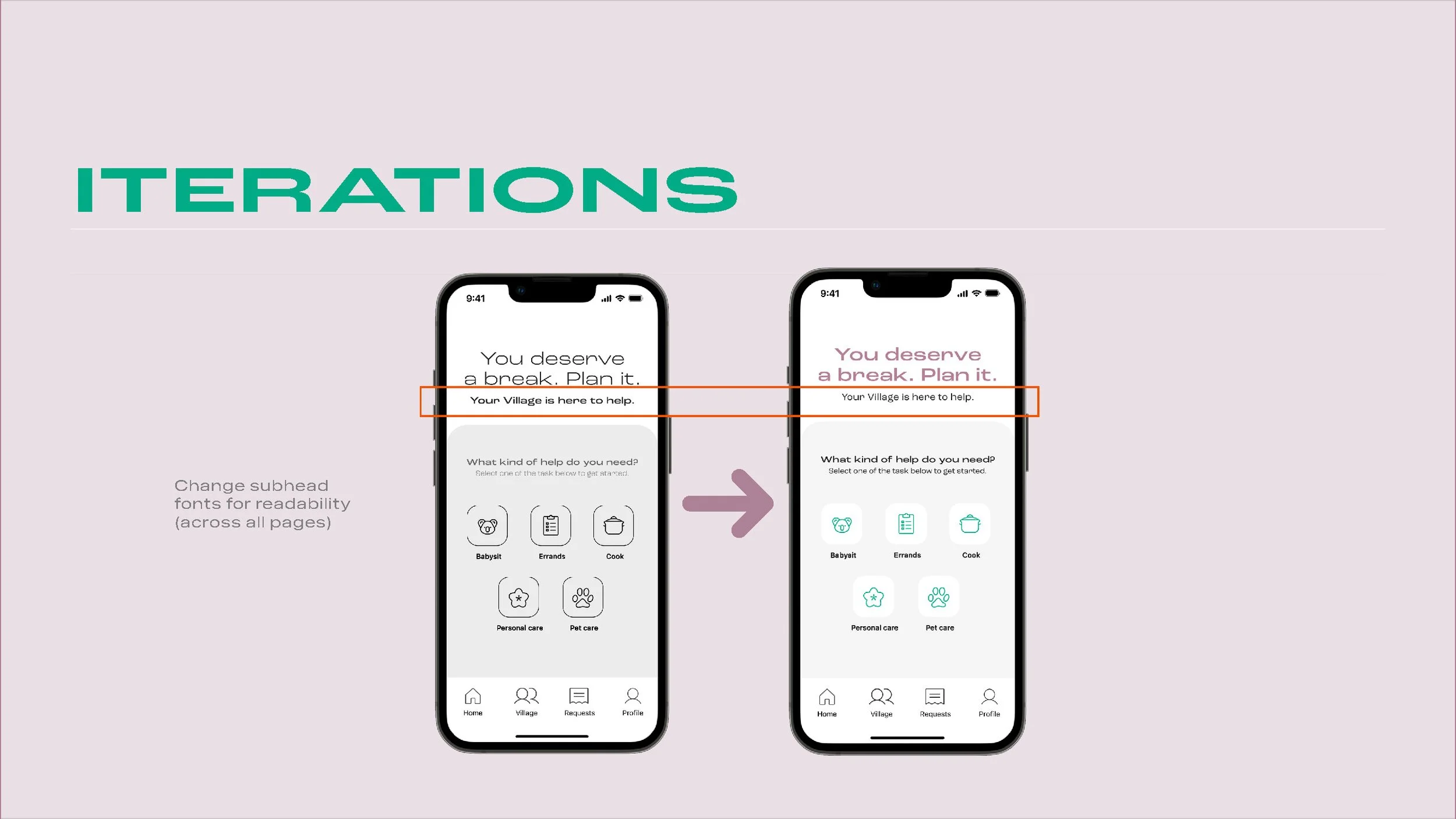
I validated early concepts through feedback sessions and usability testing, refining the flow to reduce cognitive load and emotional friction.
[RESULTS]
The research-driven approach resulted in a focused product concept centered on emotional clarity and social support. Key outcomes included:
• A clearly defined problem statement grounded in user insight
• A validated core feature that addressed emotional and behavioral barriers
• Simplified user flows that prioritized ease, consent, and trust
• A product direction aligned with real user needs rather than assumed behaviors
Bosum demonstrates how qualitative research, synthesis, and iterative validation can shape a product that responds to both functional and emotional user needs.
[Role]
UX / UI
[Deliverable]
Prototype
[Client]
Bosum
[Year]
2020














UX / UI
Give me a chance to learn about you and what your needs are.
I can show you what I’ve been working on and talk about my skills!
OR